
On the Sensex chart, IndusInd Bank, SBI, Dr Reddy's, NTPC, ICICI Bank, HCL Tech and Bajaj FinServ emerged as major laggards.

One of the key factors contributing to the decline in the value of the rupee against the US dollar is the tightening yield spread between the 10-year India government bond and the US government bond. The yield on 10-year Indian government bonds is now only 295 basis points higher than that of US 10-year treasury bonds, the lowest since January 2007. Lower spread means lower incentive for foreign investors to invest in rupee assets, which adversely affects foreign capital inflows into the country and weighs on the rupee-dollar exchange rate.

Global trends, trading activity of foreign investors and movement of oil benchmark Brent crude would dictate terms in the domestic markets this week, analysts said. Equity markets, which fell nearly 3 per cent last week, may face volatile trends amid the monthly derivatives expiry on Thursday. "This week marks the September month Futures and Options (F&O) expiry, which is expected to bring about volatility in the market," said Santosh Meena, Head of Research, Swastika Investmart Ltd.

The Indian equity market valuation has been moving in tandem with the US 10-year treasury yield. While the benchmark US bond yield has witnessed a nearly 70 basis point decline since the end of October this year, dropping from 4.93 per cent to 4.23 per cent on Friday, the Sensex earnings yield has slipped by nearly 45 basis points - from 4.5 per cent to 4.05 per cent. Previously, Indian equities' earnings yields rose in sync with the US bond yields.

Bajaj Finserv was the top gainer in the Sensex pack, rallying around 7 per cent, followed by Bajaj Finance, HDFC, L&T, ICICI Bank, Sun Pharma and NTPC. On the other hand, Tech Mahindra, ITC and M&M were the laggards.
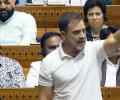
That he hasn't done so yet, has continued to be active on the political street, in public debate and on social media, signals an important change. It will give his party hope. Maybe the achievement of reducing Mr Modi well below the majority mark will now motivate him to stay committed, observes Shekhar Gupta

In New Delhi, Singh will continue US administration's ongoing consultations with India, and advance a range of issues in the US-India economic relationship and strategic partnership.

A key reason for the rise in crypto currencies in 2023 is the possibility of the world's first Bitcoin ETF over the next few months.

It is possible to be blind to this and pretend to carry on as if nothing has happened but that will not change the reality, asserts Aakar Patel.

Sentiments were also bearish largely in tandem with a sell-off in global markets as US Treasury yields surged to multi-year highs on robust economic data and comments from the Federal Reserve, sparking fears of accelerating inflation, brokers said.

The 50-issue NSE Nifty too cracked below the 11,400-mark and hit a low of 11,311.60, before finishing 102.65 points, or 0.90 per cent down at 11,354.25.

The NSE Nifty settled at 10,454.95, down 121.90 points, or 1.15 per cent.

The Reserve Bank of India's (RBI's) decision to withdraw the incremental cash reserve ratio (I-CRR) is expected to benefit banks during the festival season. They are likely to increase deposit rates by up to 25 basis points (bps) in select maturity buckets. The rise in demand for funds to cover tax payments and meet quarter-end business targets could influence rate decisions by banks, according to bankers and money market executives.

Host of lenders led by State Bank of India (SBI) and Bank of India hiked lending rates after the Reserve Bank raised the benchmark interest rate to tame inflation. The hike has been effected in their benchmark rate linked to the repo rate, which increased by half a percentage point to 5.9 per cent. Even financial institutions like mortgage lender HDFC Ltd hiked the lending rate by 50 basis points effective Saturday.

Hafiz Talha Saeed is a senior leader of the LeT and is the head of the cleric wing of the terrorist organisation.

Both indices are down nearly 9 per cent from their all-time highs in mid-January. A sharp reversal seems difficult this time as the peak impact of the virus is yet to play out.

On the Sensex chart, HDFC, L&T, SBI, Axis Bank, Bajaj FinServ and HDFC Bank were major laggards - dropping up to 2.62 per cent. NSE Nifty closed with a loss of 164.85 points at 15,080.75.

It has mostly been a one-way street for markets that have moved up sharply since July. The front-line indices - the S&P BSE Sensex and the Nifty50 - have gained 6.7 per cent and 7.3 per cent, respectively, in the past three months. The rally in mid- and small-caps has been sharper, with both indices surging 14 per cent and 9 per cent, respectively, during this period. This sharp run has made analysts at Jefferies cautious.

Reserve Bank Governor Raghuram Rajan is widely expected to hold the key rates citing high inflation at the fourth bi-monthly monetary policy announcement on Tuesday, even though the pro-growth lobby has been wishing for a rate cut.

Based on the current momentum, the funds likely to be raised through the RBI's relaxed window would be $3.5 billion-$4 billion.

With the rise in interest rates, bond yields have been on the rise; this will dent banks' treasury profits. Also, many retail borrowers may find it difficult to service their loans when the loan rates rise, points out Tamal Bandyopadhyay.

This State-corporate 'cooperation' didn't begin with the arrival of the Modi government.
Many of the big licences, contracts, and even environmental clearances for the Adani group had come in the UPA's time, points out Shekhar Gupta.

Non-resident individuals (NRIs) have also been allowed to apply for the niche banking licence, provided they plan to return to India.

The government is scheduled to release index of industrial growth for November and consumer price inflation for December later today.

Newly-appointed British Prime Minster Rishi Sunak said on Tuesday that he has been elected to fix some of the "mistakes" made by his predecessor as he promised to place "economic stability and confidence" at the heart of his government's agenda.

It said New Delhi increased its purchase of foreign exchange over the first three quarters of 2017 which does not appear necessary.

Technology giant Microsoft is in talks with TikTok's parent company ByteDance to buy its US operation.
The Reserve Bank of India (RBI) cut its key repo rate by a bigger-than-expected 50 basis points.
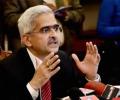
Experts disagree with the idea and the Reserve Bank of India (RBI), which has the sole right to print money, is not comfortable with it as well.
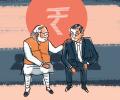
'All that Mr Modi needed to do was to call Urjit Patel over for a cup of tea and ask him nicely, and this fuss would never have happened.'

The Nifty Bank index has come off 15 per cent from its peak in February, underperforming the benchmark Nifty which is down 6%.

India's equity markets are on a roller-coaster ride, after delivering spectacular returns for two consecutive years - in 2020 and 2021. The benchmark National Stock Exchange's (NSE's) Nifty50 is down 1.5 per cent in the first nine months of the current calendar year 2022 (CY22) as foreign portfolio investors sold Indian stocks due to rising bond yields in the US and across global markets, including India. The sell-off in the Indian equity markets has, however, not been broad-based and largely limited to sectors facing earnings headwinds from rising interest rates, lower commodity and energy prices, and likely economic recession in advanced economies.
In the April-June period, bond yields rose by 30 bps.

India's wholesale price-based inflation is at a 30-year high, leading to a "very alarming" situation for the country, former World Bank chief economist Kaushik Basu said on Thursday. He, however, doesn't see any risk of hyperinflation, but cautioned that if retail inflation follows wholesale prices, it might lead to "inflationary crisis". Participating in a virtual event organised by the Asia Society, India, Basu said the inflationary situation in India is at a "very risky bend".

Flush with liquidity, banks are eager to lend. And, therein lies the problem, warns Tamal Bandyopadhyay.

Russia and China are tight-fisted and Iran is broke and none of them has the political will or capacity to bankroll the Afghan economy, which only the US can, points out Ambassador M K Bhadrakumar.

'Policy was more in line with the expectations.'

The Taliban's main challenge comes on the financial and economic front and there Pakistan doesn't have the capacity to be of any meaningful help, observes Ambassador M K Bhadrakumar.

The recent weakness of the rupee has been due to yuan's devaluation.
India imports 1.2 billion barrels of oil, and oil prices are falling, falling...
